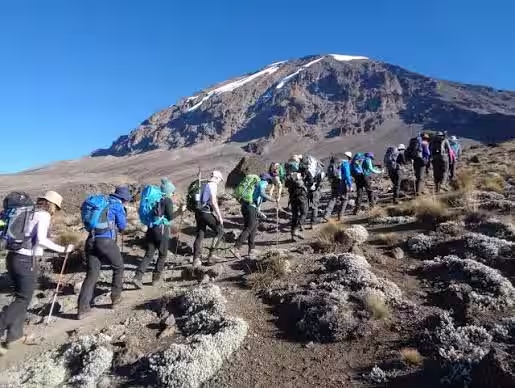
Everything you need to prepare for the Roof of Africa — the best time to go, how to train, what to pack, and how to acclimatise for the summit. Get the planning right, and Kilimanjaro is within your reach.
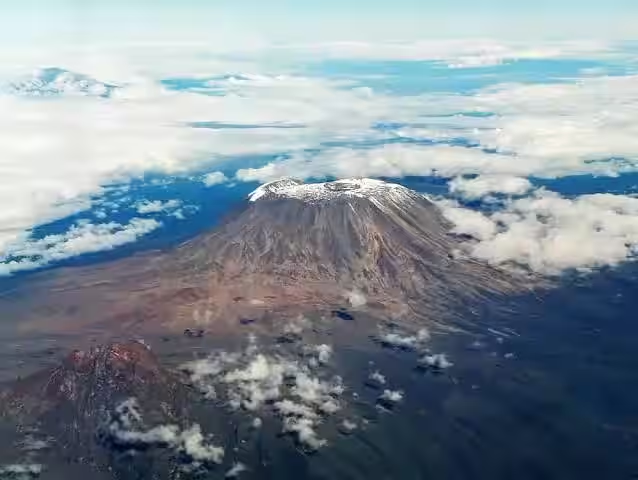
At 5,895 metres, Mount Kilimanjaro is the highest mountain in Africa and the tallest free-standing mountain in the world — and, remarkably, its summit is within reach of ordinary, reasonably fit people. No technical climbing skills, ropes or ice axes are required: Kilimanjaro is a long, high trek rather than a technical climb. But it is a serious undertaking, and reaching the top depends far more on good preparation than on raw strength.
The single greatest factor in success is altitude, and the keys to handling it are choosing a route with enough days, walking slowly, and acclimatising properly. Alongside that, sensible fitness training and the right kit make the whole experience safer, more comfortable and far more enjoyable. This guide walks you through the four essentials — when to climb, how to train, what to pack, and how to acclimatise — so you arrive at the mountain ready.
Below, we cover each in turn. And remember: with the right route, an experienced team and careful preparation, standing on the summit of Kilimanjaro is a genuinely achievable dream.
Kilimanjaro can be climbed all year round, but your experience depends heavily on the season. The mountain has two main dry seasons, which are by far the best and most popular times to climb, offering clearer skies, better views and more comfortable trekking:
The two rainy seasons are best avoided if you can: the long rains from April to May, and the short rains in November, bring wet trails, cloud and slippery going. That said, they are much quieter, and well-prepared trekkers on longer routes still summit successfully. Many climbers also like to time their ascent around the full moon, when a bright night sky can light the final summit push beautifully. Whenever you go, we’ll advise on the ideal dates for your plans. The table below summarises what to expect month by month.
| Months | Season | Conditions |
|---|---|---|
| Jan – mid-Mar | Dry season | Warm, mostly clear, quieter — excellent for climbing |
| Apr – May | Long rains | Wet and cloudy — best avoided; very quiet |
| Jun – Oct | Dry season | Stable and dry, superb conditions — the busiest, most popular window |
| Nov | Short rains | Intermittent rain and cloud — quieter, manageable on longer routes |
| Dec | Shoulder | Increasingly dry towards the festive season — can be busy |
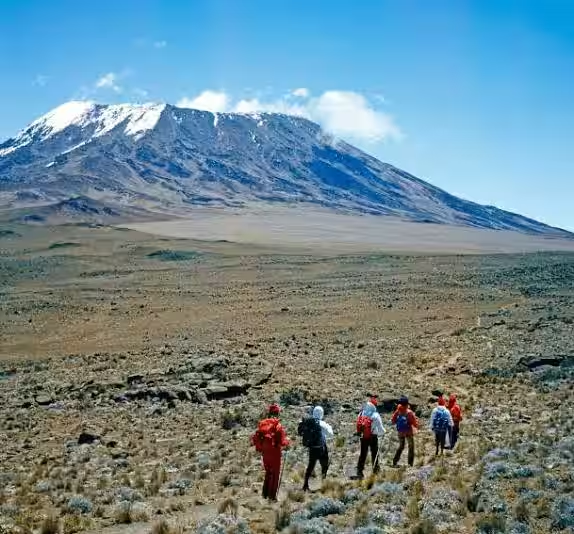
You do not need to be an athlete to climb Kilimanjaro, but you do need to be reasonably fit and well prepared. The mountain is a sustained challenge — several consecutive days of walking for six to eight hours, followed by a long, demanding summit night — so the fitter and better trained you are, the more you’ll enjoy it and the better you’ll cope with the altitude.
We recommend beginning a focused training programme at least two to three months before your climb, built around three things:
Just as important, break in your hiking boots thoroughly beforehand to avoid blisters, and prepare mentally — a positive, patient mindset is one of the most valuable things you can bring. Kilimanjaro rewards steady determination far more than speed or brute strength.
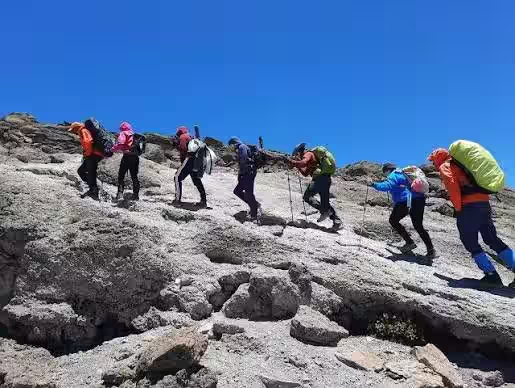
The hardest part of any Kilimanjaro climb is the summit night. Setting off around midnight, you climb by headtorch through the cold and dark for six to eight hours, reaching Uhuru Peak around sunrise — a slow, demanding push at extreme altitude that tests your endurance and resolve more than anything else on the mountain.
This is exactly why training and, above all, acclimatisation matter so much. Arriving at summit night rested, well-acclimatised and mentally prepared makes all the difference — and our guides pace the ascent carefully, encourage you every step, and are there to support you all the way to the roof of Africa and safely back down.
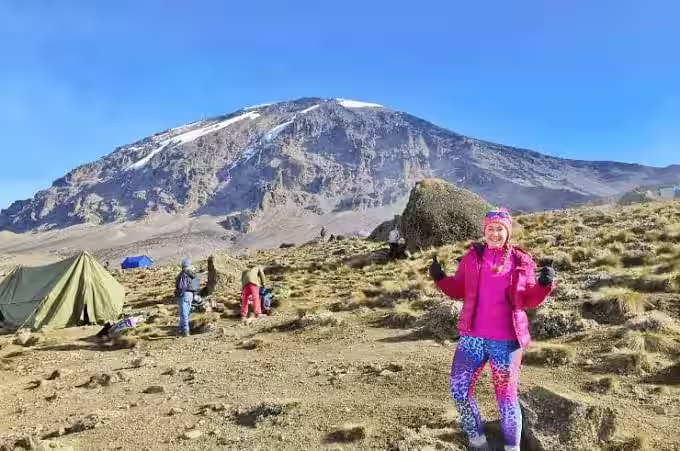
Kilimanjaro takes you through five climate zones in a matter of days — from steamy rainforest to arctic summit — so layering is everything. The right kit keeps you warm, dry and comfortable, which in turn helps you acclimatise and enjoy the climb. Your porters carry the bulk of your gear in a duffel (typically up to around 15kg), while you carry a daypack with the essentials you need through the day.
Here is a practical guide to what to bring. We’ll send you a full, detailed packing list when you book, and quality kit can also be hired locally in Arusha if you’d rather not buy everything.
| Category | What to bring |
|---|---|
| Base layers | Moisture-wicking thermal tops and bottoms (avoid cotton) |
| Insulation | Fleece or mid-layer plus a warm insulated (down) jacket for the summit |
| Outer shell | Waterproof, windproof jacket and over-trousers |
| Legs | Hiking trousers and thermal leggings for higher camps |
| Head & hands | Warm hat, sun hat or cap, buff or balaclava, liner gloves and warm insulated gloves |
| Footwear | Broken-in waterproof hiking boots, camp shoes, and plenty of hiking and thermal socks |
| Sleeping | A four-season sleeping bag rated to roughly −10 to −18°C (hireable locally) |
| Daypack & trekking | 30–35L daypack, trekking poles, headtorch with spare batteries, 3L of water capacity |
| Sun & health | Category 3–4 sunglasses, high-SPF sunscreen, lip balm, personal first-aid and blister plasters |
| Extras | Duffel bag for porters, quick-dry towel, wet wipes, snacks, water purification and cash for tips |
Acclimatisation is the most important factor in reaching the summit safely — more than fitness, more than anything. As you climb, the air thins and your body needs time to adjust; pushing too high too fast is what causes Acute Mountain Sickness (AMS), whose symptoms include headache, nausea, fatigue, dizziness, loss of appetite and poor sleep. The good news is that, managed well, altitude is very manageable, and serious problems are rare.
The golden rules are simple, and we build every climb around them:
Throughout your climb, our experienced guides monitor your wellbeing with twice-daily health checks and a pulse oximeter, watch for any signs of altitude sickness, and know exactly how to respond. Their judgement and care are one of the biggest reasons to climb with a quality operator — and the difference between a safe, successful summit and a difficult one.

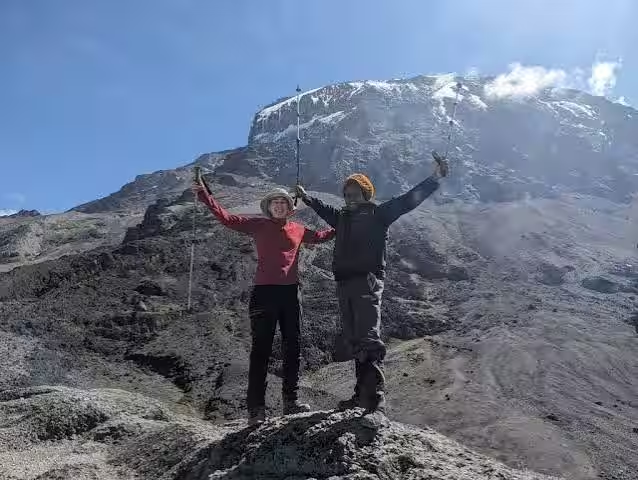
After the days of climbing and the long, cold summit night, nothing compares to the moment you reach Uhuru Peak at sunrise — the highest point in Africa, the glaciers glowing gold, and the whole continent seeming to fall away beneath your feet. It is one of the great achievements in all of trekking, and a memory that will stay with you for the rest of your life.
Start PlanningChoosing the right operator is as important as any preparation you make. We run Kilimanjaro climbs to the highest standards of safety and quality: experienced, certified guides with deep knowledge of the mountain and altitude; strong guide-to-climber ratios; twice-daily health monitoring and emergency oxygen carried on every climb; and well-fed, fairly-treated porter teams who make the experience possible.
We also help you make the crucial decisions — above all, choosing a route with enough days to acclimatise properly, which is the biggest single factor in reaching the top. From your first enquiry to the summit and back, we take care of the logistics, the permits, the equipment and the details, so you can focus on the climb of a lifetime. For a full look at the routes themselves, see our main Kilimanjaro page.


“The training and the “pole pole” pace got us there — reaching Uhuru Peak at sunrise was the proudest moment of our lives. WonderNest prepared us perfectly for every step.”
Sofia & Luca R., ItalyMost routes take six to nine days on the mountain, and in general more days means better acclimatisation and a much higher chance of reaching the summit. We usually recommend seven days or more — routes like Lemosho and the Northern Circuit are excellent for this.
No — Kilimanjaro is a high-altitude trek, not a technical climb, so no ropes, ice axes or mountaineering skills are needed. What matters is reasonable fitness, good preparation and, above all, proper acclimatisation.
You should be reasonably fit and able to hike for six to eight hours on consecutive days. We recommend training for two to three months beforehand, focusing on cardio, hill walking with a loaded pack, and leg and core strength.
The two dry seasons — January to mid-March and June to October — offer the best conditions and are the most popular. The rainy seasons (April–May and November) are best avoided if possible, though longer routes still summit successfully.
Mild altitude symptoms are common, but serious cases are rare when you acclimatise properly and climb with an experienced team. Our guides carry out twice-daily health checks, monitor oxygen levels, carry emergency oxygen, and know exactly how to respond.
Layering is key, from rainforest warmth to arctic summit cold — base layers, insulation, a waterproof shell, warm hat and gloves, broken-in boots and a four-season sleeping bag. We send a full detailed packing list on booking, and quality kit can be hired in Arusha.
Tell us when you'd like to climb and we'll help you pick the right route and get properly ready — so you reach the Roof of Africa safely and with a smile.