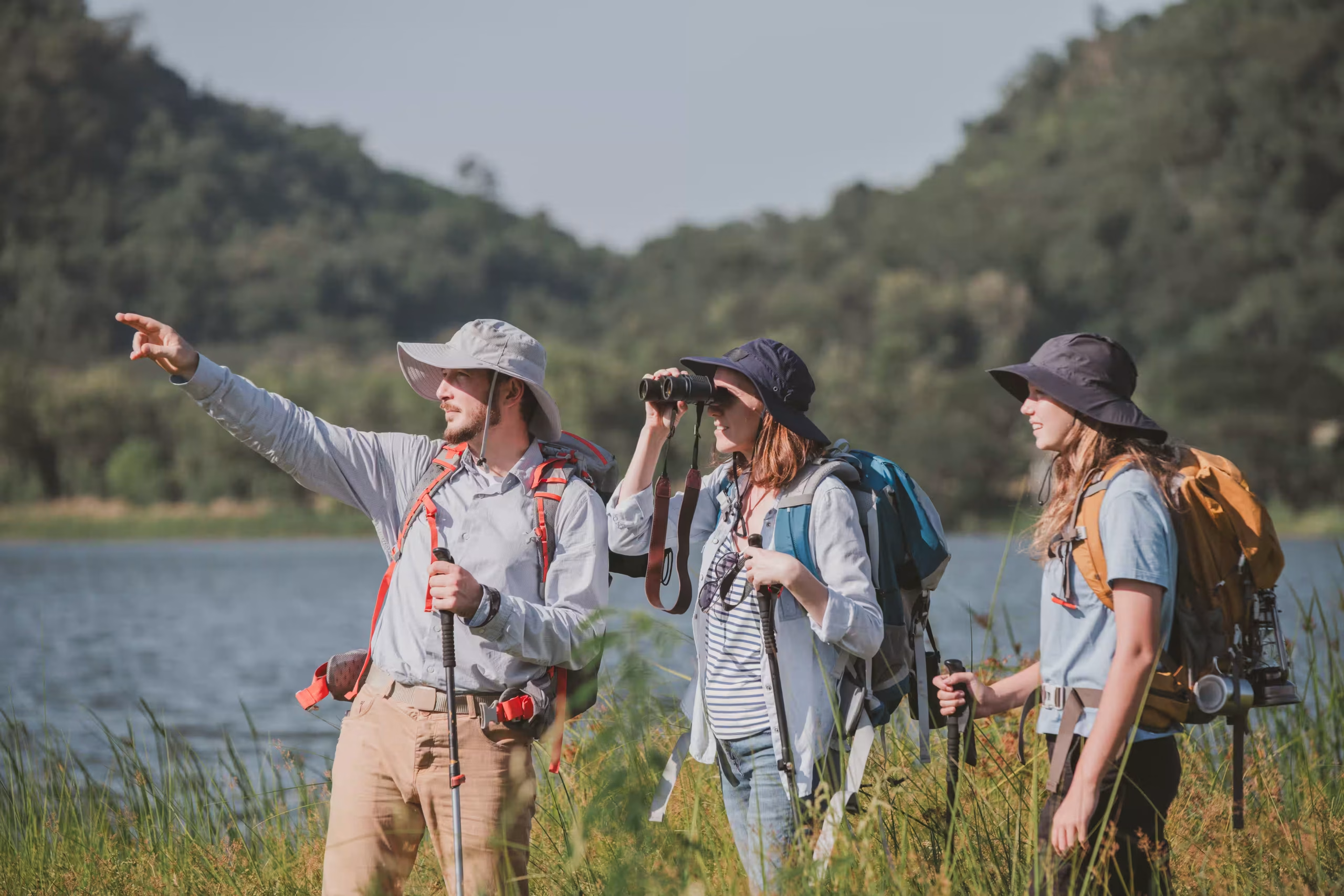
Guide pointing out tracks on a walking safari — 800×1000
Tracking & Signs
Learn to read tracks, dung, feathers and trails — the hidden language of the bush.
Enquire →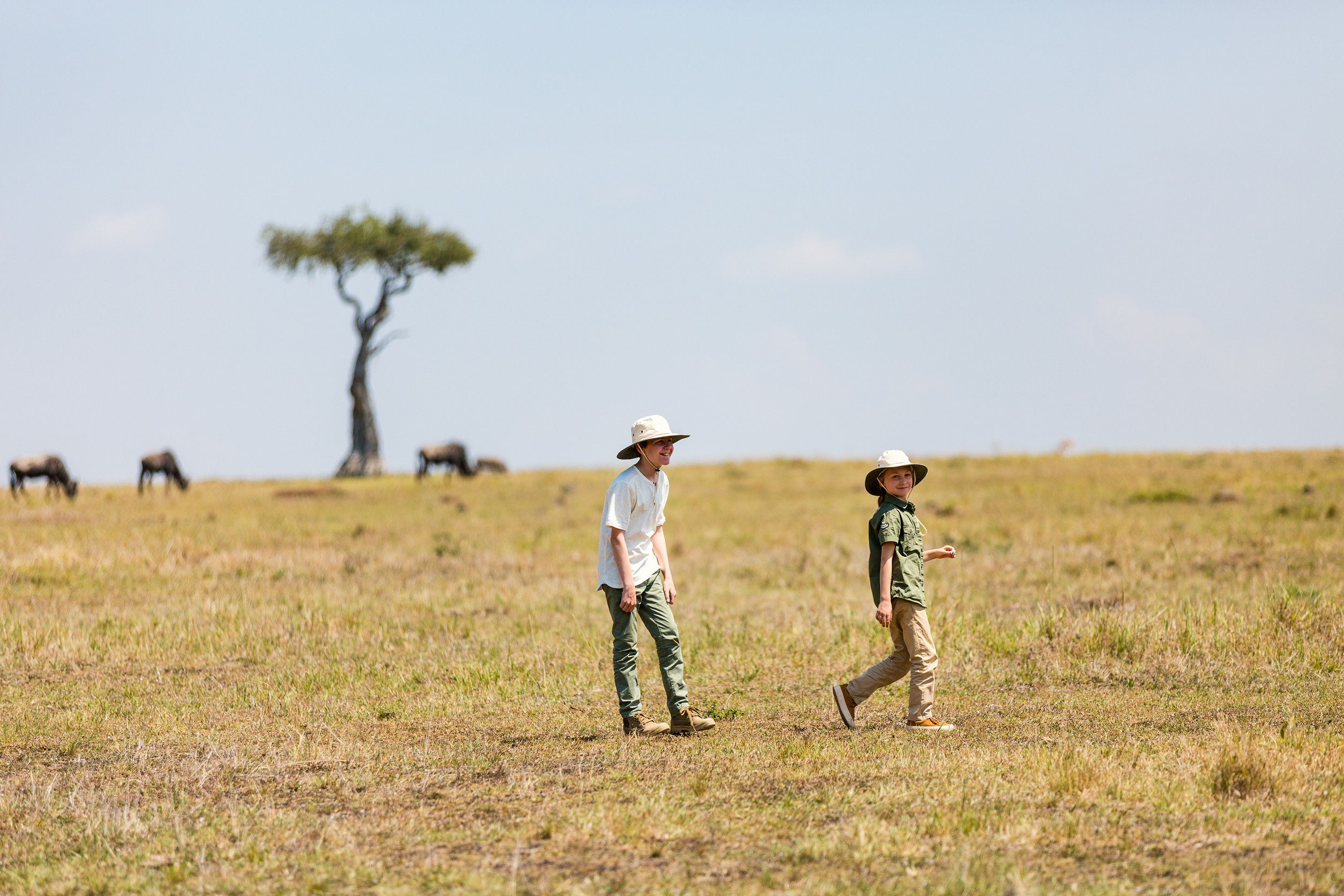
Step out of the vehicle and into the wild. With an expert guide and an armed ranger beside you, a walking safari brings the little wonders to life — the tracks, the scents, the sounds you'd never notice from a 4x4 — and a thrilling, close-up connection to Africa you won't forget.
A typical walking safari sets out in the cool of early morning, when the bush is at its most active and the light at its most beautiful. Moving quietly in a small group behind your guide and ranger, you follow tracks and trails, pausing often to examine, listen and learn — there is no rush, and the walk is as much about atmosphere and understanding as about wildlife sightings.
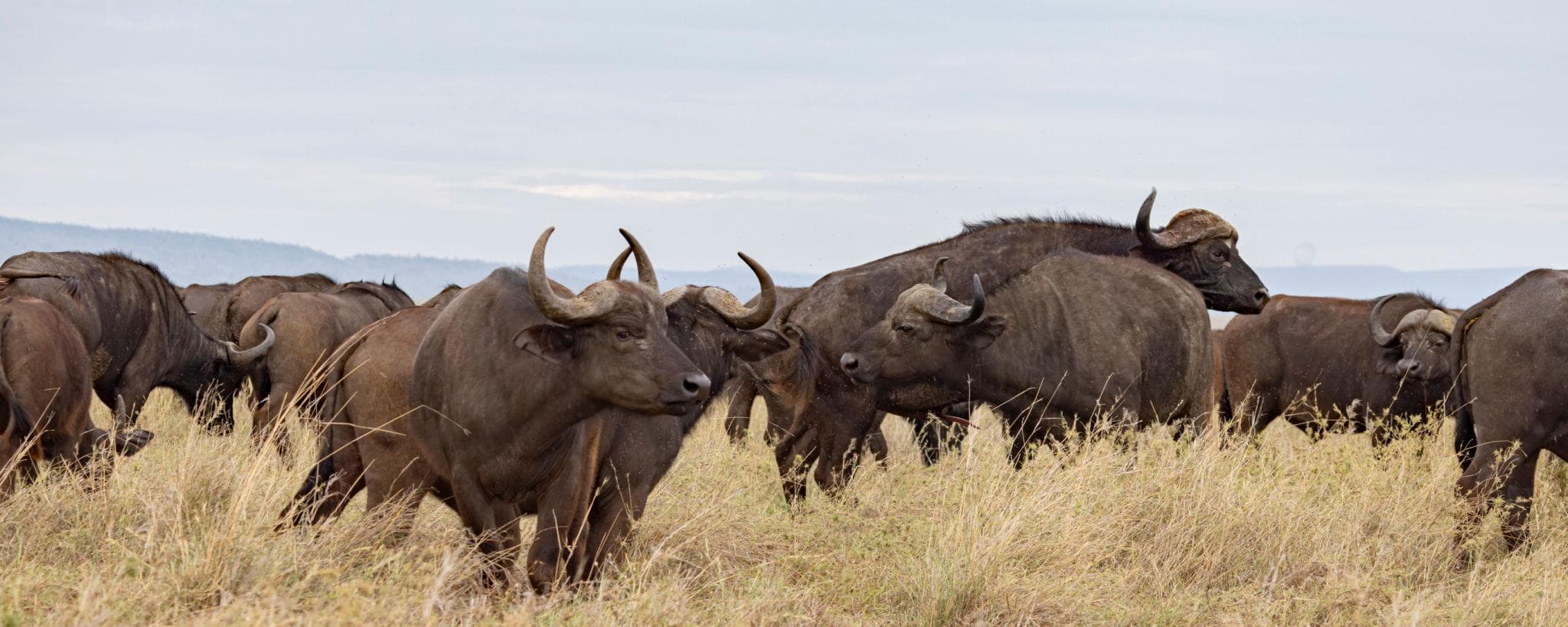
The thrill of being on foot in big-game country is impossible to overstate. Encountering elephant, giraffe or buffalo at ground level, with no metal between you and the wild, sharpens every sense and brings a respect for these animals that no game drive can. Your guide chooses routes and keeps a safe, sensible distance, so the experience is exhilarating rather than alarming — a primal, unforgettable connection to the African wilderness.
Not every park permits walking, which makes the ones that do all the more special. Tanzania’s wild southern parks are the walking heartland: Nyerere (Selous) and Ruaha both offer superb guided walks through untamed, uncrowded wilderness, often combined with boat safaris and game drives for a wonderfully varied trip.
In the north, walking is offered in the private concessions bordering Tarangire and other parks, and Arusha National Park — which has no lions — is one of the safest and most accessible places to walk, with giraffe, buffalo and colobus monkeys in beautiful forest and lakeside scenery. We know exactly which camps and areas offer the finest walking, and build it into your itinerary wherever it fits best.
A walking safari opens up a side of the bush that the vehicle simply cannot reach.
Learn to read tracks, dung, feathers and trails — the hidden language of the bush.
Enquire →
Insects, plants, birds and reptiles take centre stage in a way they never can from a vehicle.
Enquire →
The unforgettable thrill of encountering elephant, giraffe or buffalo at ground level.
Enquire →
For the adventurous, combine walking with a night under canvas deep in the bush.
Enquire →
There is nothing quite like the feeling of walking in the African bush — the crunch of dry grass underfoot, the sudden alertness when a guide raises a hand, the smell of the earth, the closeness of the wild. Stripped of the vehicle, you are simply another creature in the landscape, senses heightened and heart quickened, and it brings a connection to Africa that stays with you long after you return home.
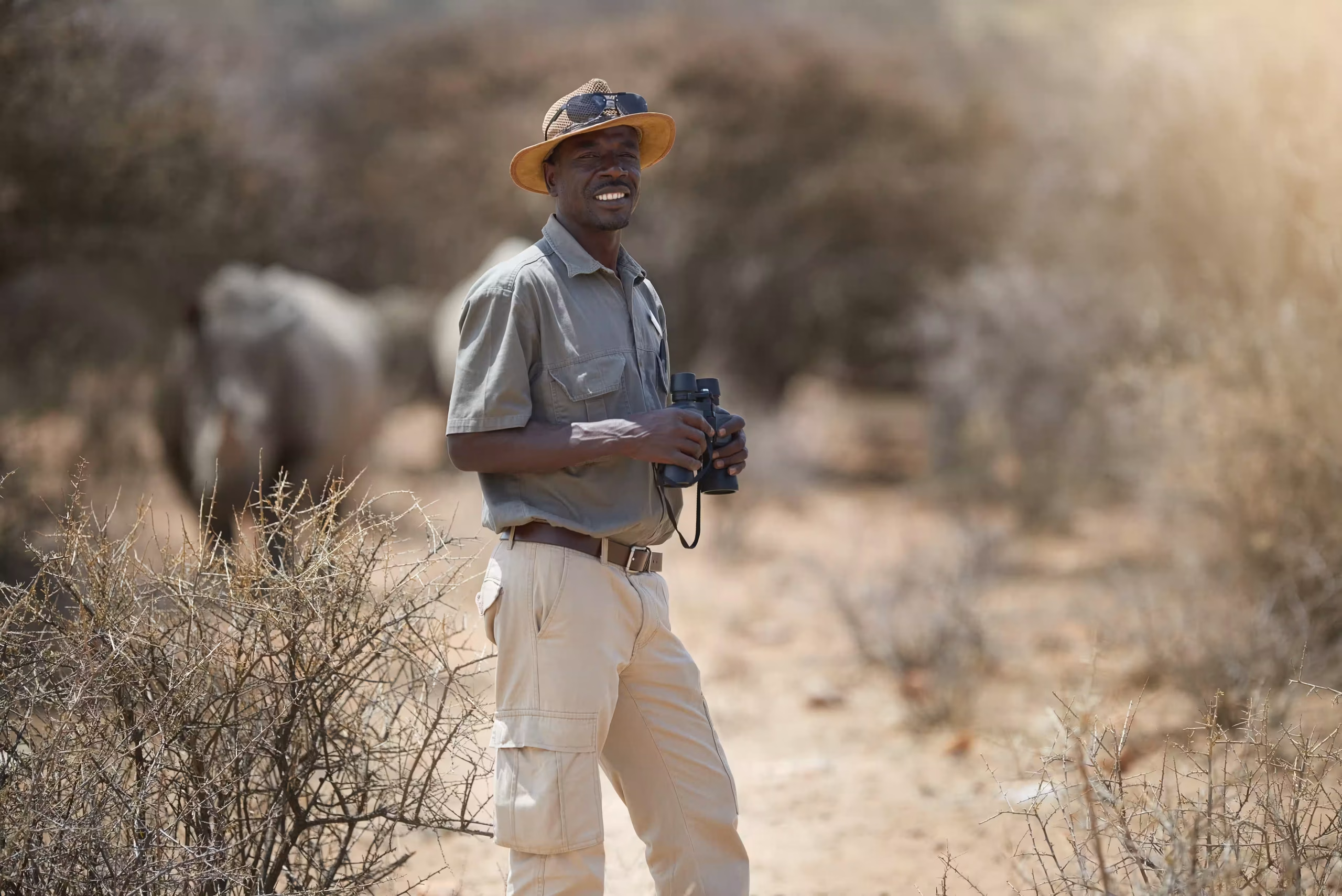
Walking in big-game country is done with the utmost care and expertise. Every walk is led by a highly trained, professional guide who knows the bush intimately, accompanied by an armed ranger, and conducted in small groups following clear protocols — walking quietly in single file, staying downwind, and keeping a sensible distance from wildlife. Your guide chooses routes carefully and reads animal behaviour constantly, so the experience is thrilling but never reckless.
A short briefing beforehand covers everything you need to know, and the guides’ calm expertise quickly puts everyone at ease. The result is an experience that feels wonderfully wild and adventurous while remaining genuinely safe — which is exactly why we work only with camps whose walking guides are among the most experienced in Tanzania.
Many travellers are surprised by how quickly a walking safari becomes the part of the trip they remember most vividly. There is something about experiencing the wild on foot — the heightened senses, the closeness, the sheer aliveness — that stays with you long after you return home, and it gives you a whole new appreciation for the bush and the animals that live in it.