More than fitness, more than anything, acclimatisation is what gets you safely to the summit of Kilimanjaro. Here’s how altitude affects your body, and the golden rules that give you the best chance of reaching the top.
If there is one thing that determines success on Kilimanjaro, it is acclimatisation — the process by which your body adjusts to the thinner air as you climb. It matters more than fitness, more than strength, more than anything else. As you gain altitude, there is less oxygen in every breath, and your body needs time to adapt. Give it that time, and the summit is within reach; rush, and you risk altitude sickness and a failed climb.
At the summit, at 5,895 metres, there is roughly half the oxygen available at sea level, so the challenge is real — but it is very manageable when handled well. The single most important thing you can do is climb slowly and choose a route with enough days for your body to adjust. Everything else — hydration, rest, and the care of an experienced team — supports that.
None of this should put you off — quite the opposite. Understanding how altitude works, and climbing with a team who manage it expertly, is exactly what makes Kilimanjaro so achievable for ordinary, determined people. The mountain asks for patience rather than heroics, and those who respect the altitude and take it slowly are the ones who so often reach the top.
Below we explain how altitude affects you, the warning signs to watch for, and the golden rules we build every climb around to keep you safe and give you the best possible chance of reaching Uhuru Peak.

As you climb high, it’s common to feel some effects of the altitude, known as Acute Mountain Sickness (AMS). Mild symptoms include headache, nausea, fatigue, dizziness, loss of appetite and poor sleep — a bit like a hangover — and are a normal sign that your body is working to adjust. Managed properly, they usually pass, and most climbers experience nothing worse.
The important thing is to recognise these signs, tell your guide honestly how you feel, and never push higher if symptoms are worsening. In rare cases, AMS can progress to more serious conditions, which is exactly why climbing with an experienced team who monitor you closely matters so much. Our guides carry out twice-daily health checks, measure your oxygen levels with a pulse oximeter, and know precisely how to respond — almost always by simply slowing down or, if needed, descending.
Acclimatising successfully comes down to a handful of simple, proven principles — and we build every climb around them:
Follow these rules, and you give yourself every chance of a safe, successful and enjoyable climb.
| Route length | Acclimatisation | Success |
|---|---|---|
| 5–6 days | Limited time to adjust | Lower — the body has little margin at altitude |
| 7 days | Good acclimatisation | High — a strong, popular choice |
| 8–9 days | Excellent acclimatisation | Highest — routes like Lemosho & the Northern Circuit |
Climbing with an experienced, safety-focused operator is one of the most important decisions you’ll make — and central to acclimatising well. Our certified guides know the mountain and the effects of altitude intimately. They pace the ascent carefully to the golden “pole pole” rhythm, carry out twice-daily health checks using a pulse oximeter to monitor your oxygen levels and heart rate, and watch continually for any signs of altitude sickness.
Crucially, they know exactly how to respond — almost always by slowing down, and, in the rare cases where it’s needed, by descending, which is the fastest and most effective remedy. Every climb also carries emergency oxygen and a first-aid kit. This expertise and vigilance are the difference between a safe, successful summit and a difficult one, and the biggest reason to climb with a quality team.
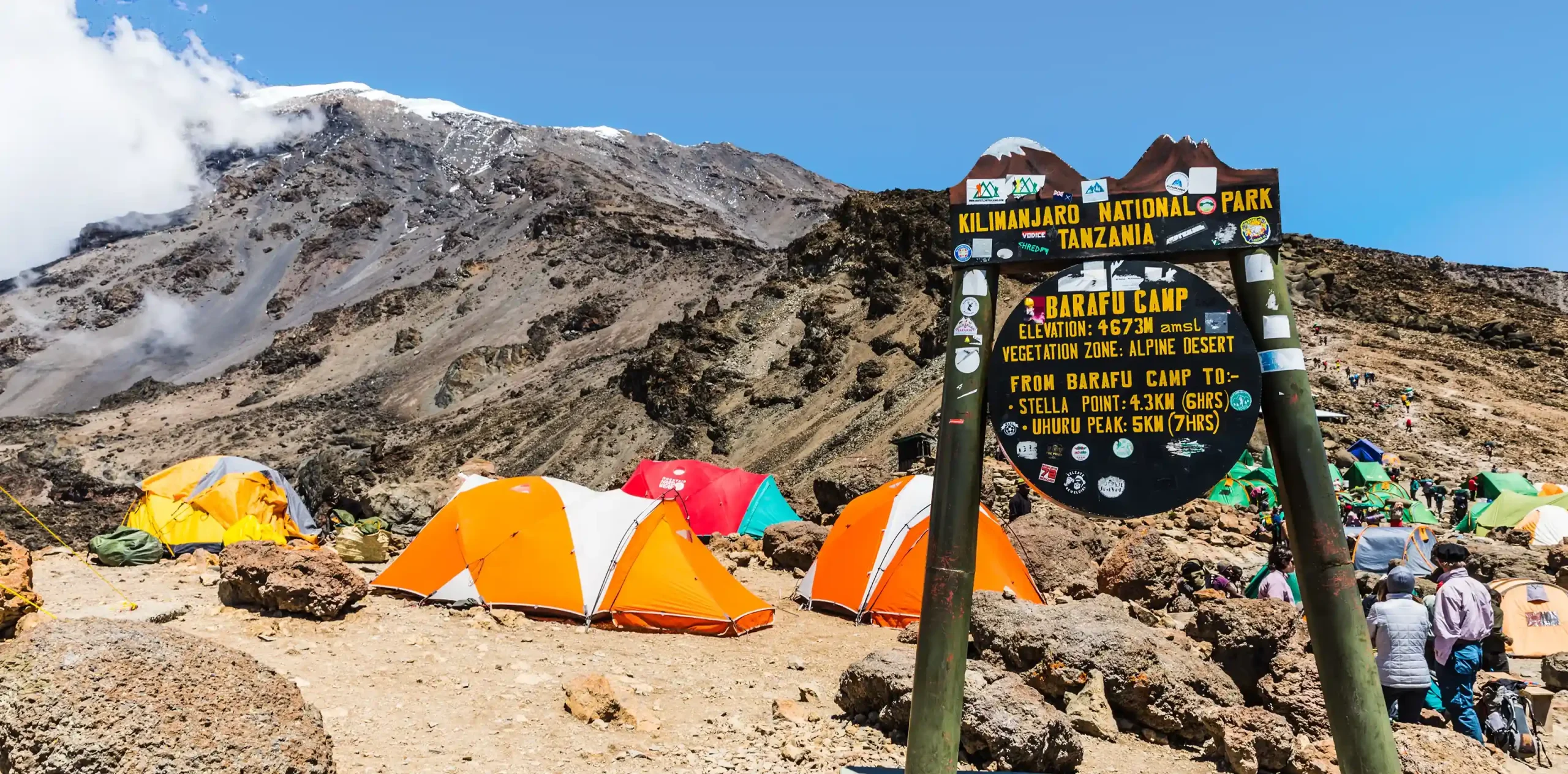
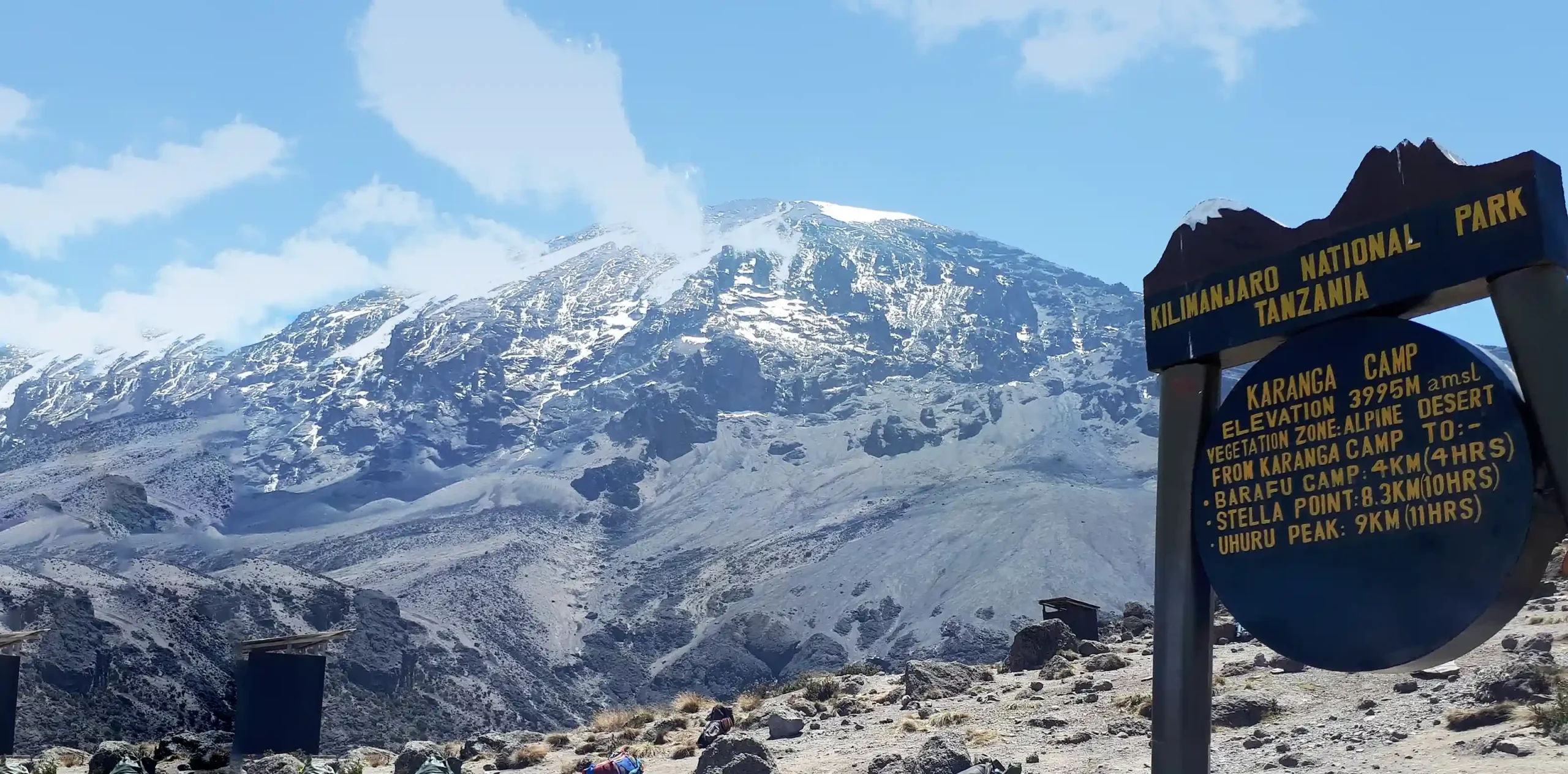
While mild altitude symptoms are common and usually harmless, it is important to understand that, very occasionally, AMS can progress to serious conditions — a build-up of fluid on the brain or in the lungs — which require immediate action. Warning signs to take seriously include a severe or persistent headache, repeated vomiting, confusion, loss of coordination, breathlessness at rest or a persistent cough. These are rare, especially on well-acclimatised routes, but they must never be ignored.
The golden rule is simple: if serious symptoms appear, descend. Going down, even a few hundred metres, is the fastest and most effective remedy, and it works quickly. This is precisely why climbing with an experienced, attentive team matters so much — our guides monitor you closely, carry emergency oxygen, and will always make the safe decision, even if that means turning back. Reaching the summit is wonderful, but your safety always comes first, and trusting your guides’ judgement is part of a successful climb. Handled well, altitude is very manageable, and the great majority of well-prepared climbers reach the top safely.

Take it slowly, choose enough days, listen to your body and your guides, and the summit of Kilimanjaro is a genuinely achievable goal. Acclimatisation is the key that unlocks the mountain — and with the right route and an experienced team beside you, you give yourself the very best chance of standing on the roof of Africa at sunrise.
Start Planning


““Pole pole” was everything — our guides slowed us right down, kept a close eye on us, and got us all to the top feeling strong. Their care made the summit possible.”
Rachel & James P., AustraliaMany climbers feel some mild effects of the altitude, which is normal and usually passes — but with proper acclimatisation, a slow pace and enough days, serious problems are rare. Our guides monitor you closely throughout and know exactly how to keep you safe.
Acclimatisation — giving your body time to adjust to the thinner air. It matters more than fitness. The keys are walking slowly (“pole pole”), choosing a route with enough days, and staying well hydrated and rested.
Mild Acute Mountain Sickness (AMS) — headache, nausea, fatigue and poor sleep — is common and usually passes. Serious cases are rare when you acclimatise properly and climb with an experienced team who monitor you closely and know how to respond.
More days means better acclimatisation and a much higher success rate. We generally recommend seven days or more; longer routes such as Lemosho and the Northern Circuit (eight to nine days) offer the best acclimatisation of all.
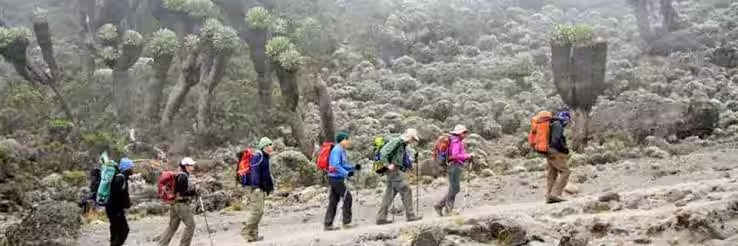
It is Swahili for “slowly, slowly” — the mantra of Kilimanjaro. Walking more slowly than feels natural gives your body time to adjust to the altitude and dramatically improves your chances of reaching the summit.
Our certified guides pace the climb carefully, carry out twice-daily health checks with a pulse oximeter, watch for any signs of altitude sickness, and carry emergency oxygen. They know exactly how to respond — usually by slowing down, or if needed, descending.
Tell us your plans and we'll steer you towards a route with the gentle, gradual acclimatisation that gets far more people safely to the top.