wondernest travel

Snow-capped summit of Mount Kilimanjaro above the clouds — 2400×1400
Roof of Africa

Kilimanjaro Climbs

At 5,895 metres, Mount Kilimanjaro is the highest mountain in Africa and the tallest free-standing mountain on Earth — and reaching its snow-capped summit is one of the most rewarding adventures a traveller can undertake. With expert local guides and a safety-first approach, we’ll get you to the top.
IThe Mountain

Standing on the Roof of Africa

Kilimanjaro is a mountain of superlatives. Rising in glorious isolation from the plains of northern Tanzania, it climbs through five distinct climate zones — from cultivated farmland and lush rainforest, through heath and alpine desert, to the arctic summit and its retreating glaciers. In a single climb you pass, in effect, from the equator to the Arctic in the space of a few days.

The five zones are a journey in themselves. You begin among banana plantations and coffee farms on the fertile lower slopes, climb into a mossy, atmospheric cloud forest alive with birdsong and monkeys, emerge onto open moorland dotted with giant lobelias and groundsels, cross a stark high-altitude desert of rock and dust, and finally reach the glaciated arctic summit. Few journeys anywhere pack such variety into so few days.

Crucially, Kilimanjaro is a trekking peak, not a technical climb. You need no ropes, ice axes or mountaineering experience — just reasonable fitness, determination and, above all, a sensible approach to altitude. This is what makes it achievable for ordinary, motivated travellers, and why tens of thousands attempt it each year. It is also why the choice of operator matters so much: success and safety on Kilimanjaro come down to acclimatisation, pacing, quality guiding and good support.

Why climb with a local team

Our guides were born and raised in the shadow of the mountain. They have summited hundreds of times, are trained in wilderness first aid and altitude illness, and carry oxygen and a pulse oximeter on every climb. We keep our groups small, our pace deliberately slow — pole pole, “slowly, slowly” in Swahili — and our camps well provisioned, because the surest route to the summit is a body given time to adjust.

IIThe Routes

Choose Your Route

Every route leads to Uhuru Peak, but each offers a different balance of scenery, difficulty, traffic and acclimatisation. Here is how the main routes compare.

RouteDaysDifficultySceneryBest for
Machame — “Whiskey”6–7Moderate–HardExcellent, variedFit trekkers wanting great scenery and value
Lemosho7–8ModerateOutstanding, remoteBest acclimatisation and highest success
Marangu — “Coca-Cola”5–6ModerateGoodThose who prefer hut accommodation
Rongai6–7ModerateWilderness, quietDrier northern approach, wet-season climbs
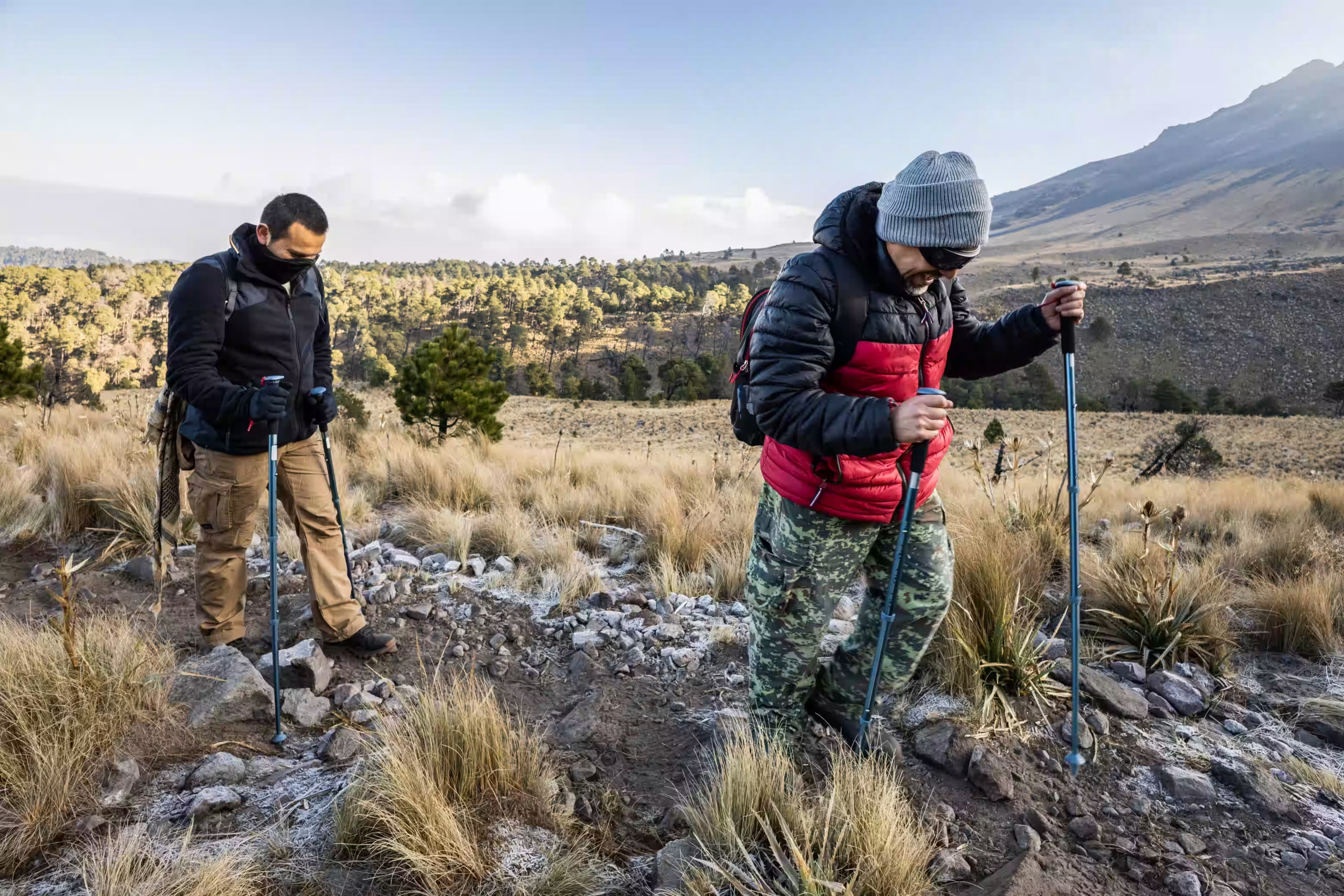
Trekkers on the trail with the Kilimanjaro summit ahead
Trekkers on the trail with the Kilimanjaro summit ahead — 1000×750
The Experience

What to Expect on the Climb

A Kilimanjaro climb settles quickly into a rhythm. Each morning you wake to hot drinks and a cooked breakfast, pack your day bag, and set off at a gentle pace while porters strike camp and move ahead to prepare the next one. You walk for four to seven hours a day, pausing for a packed lunch, arriving at camp in the afternoon to warm drinks, rest and dinner.

The days build steadily — a key principle is “climb high, sleep low”, gaining altitude during the day and descending a little to sleep, so your body adapts. Then comes summit night: you set out around midnight under a canopy of stars, climbing slowly through the cold to reach the crater rim at Stella Point and, finally, Uhuru Peak in time for a sunrise that few who see it ever forget.

It is hard — the altitude and the cold see to that — but the sense of achievement is total, and our guides are with you every step, encouraging, monitoring and keeping you safe.

Summit: Uhuru Peak, 5,895m  ·  Group size: small, private available
IIIPreparation

Getting Ready for the Mountain

You do not need to be an athlete to climb Kilimanjaro, but the fitter and better prepared you are, the more you will enjoy it. We recommend beginning training two to three months out, focusing on:

  • Cardiovascular fitness — regular hiking, running, cycling or swimming to build stamina.
  • Long day hikes — ideally on hills, wearing the boots and daypack you’ll use, to condition your legs and break everything in.
  • Back-to-back days — hiking on consecutive days to prepare for the cumulative effort of a multi-day trek.
  • Mental preparation — summit night is as much about determination as fitness; knowing what to expect helps enormously.

Altitude affects everyone differently and cannot be predicted by fitness alone, which is why we favour longer routes with better acclimatisation profiles, keep the pace slow, and encourage you to drink plenty of water. On booking, we send a full pre-departure pack with training advice, a detailed kit list and everything you need to arrive ready.

IVPacking

What to Pack

Layering is the key to comfort on Kilimanjaro, where you may experience tropical heat and sub-zero cold on the same climb. Essentials include:

  • Base & insulating layers — moisture-wicking tops, fleece or down mid-layers, and a warm insulated summit jacket.
  • Waterproofs — a good waterproof jacket and trousers for the rainforest and changeable weather.
  • Broken-in boots & a warm sleeping bag — rated to at least −10°C. Both can be hired locally through us if you prefer.
  • Accessories — warm hat, sun hat, gloves (liner and insulated), headtorch, sunglasses, high-factor sunscreen and a reusable water bottle or hydration bladder.

Porters carry your main kit bag between camps, so you only ever hike with a light daypack containing water, snacks, layers and camera. We provide quality mountain tents, sleeping mats, all meals and safe drinking water throughout.

5,895mSummit altitude
7–8Days on the best routes
95%+Guided success rate
1000sClimbers guided
VBest Time

When to Climb

Kilimanjaro can be climbed year-round, but the best conditions fall in two clear windows. January to early March is warmer and generally clear, with a good chance of snow at the summit and fewer climbers — a favourite of ours. June to October is the long dry season: cooler but stable and dry, and the busiest period, so we plan ahead to keep your climb well spaced.

The long rains of April and May and the short rains of November bring more cloud and wet trails; climbs are still possible — the Rongai route on the drier northern side is a good wet-season choice — but require the right preparation. Whatever the month, we’ll advise the ideal route and dates for the experience you want.

Climbers celebrating at the Uhuru Peak summit sign at sunrise
Climbers celebrating at the Uhuru Peak summit sign at sunrise — 1000×750
The Summit

The View From the Roof of Africa

Nothing quite prepares you for summit morning. After the long, cold climb through the dark, the first light breaks over the curve of the earth and the world falls away beneath your feet. You stand higher than anything else on the continent, ringed by the mountain’s ancient glaciers — great walls of ice that have crowned the equator for thousands of years and are, sadly, slowly retreating.

At the summit sign on Uhuru Peak, exhaustion gives way to something close to disbelief. Below you, the plains of Amboseli and the Rift stretch into the haze; above, only sky. It is a feeling our climbers describe as one of the proudest of their lives — and one our guides feel with you, every single time. After photographs and a few unforgettable minutes, we begin the descent, back through the zones towards warmth, oxygen and a celebration you have thoroughly earned.
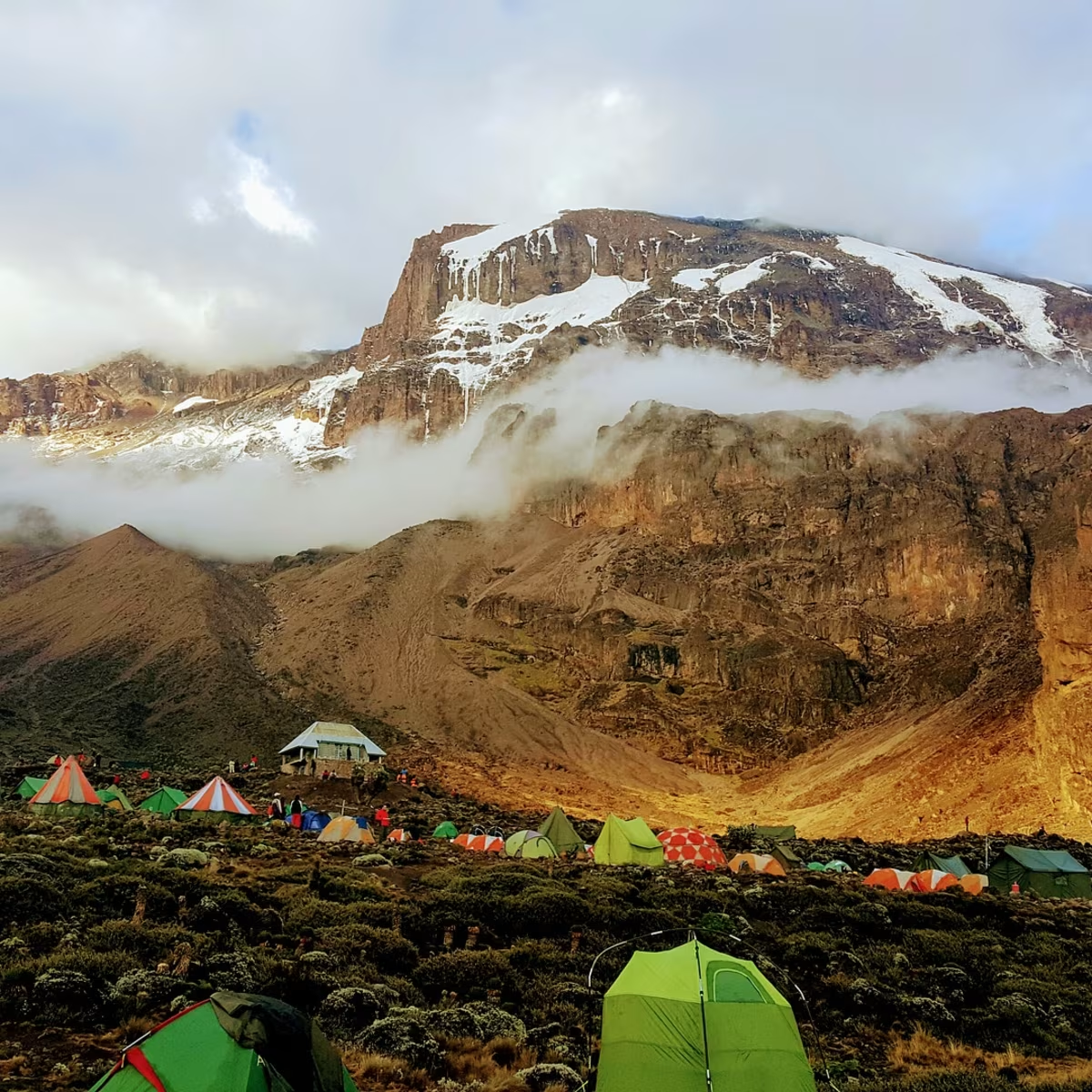
Uhuru Peak, 5,895m  ·  sunrise summit
Kilimanjaro porters and camp set up at a mountain campsite
Kilimanjaro porters and camp set up at a mountain campsite — 1000×750
Included

Everything Taken Care Of

Our Kilimanjaro climbs are fully supported and all-inclusive. From the moment you arrive we handle the logistics so you can focus entirely on the mountain: professional, government-licensed guides and an experienced team of cooks and porters; all park entry, rescue and camping fees; quality mountain tents and comfortable sleeping mats; three freshly prepared hot meals a day; and safe, purified drinking water throughout.

Also included are airport and hotel transfers, a pre- and post-climb hotel night in Arusha or Moshi, and a thorough gear check before you set off. Emergency oxygen, a first-aid kit and a pulse oximeter come on every climb as standard. Optional extras — such as quality gear hire, extra hotel nights, private climbs and a Serengeti or Zanzibar add-on — are easily arranged. We’ll send a clear, itemised breakdown with your quote so you know exactly what is covered.

Fully supported: guides, porters, meals, fees  ·  Group or private
VIGood to Know

Kilimanjaro FAQ

No. Kilimanjaro is a trek, not a technical climb — there is no rope work or mountaineering skill required. What you do need is reasonable fitness, good preparation and a sensible, slow approach to altitude, all of which we help you with.

Safety is our first priority. We choose routes with strong acclimatisation profiles, walk slowly, and our guides monitor every climber daily with health checks and a pulse oximeter. We carry emergency oxygen and a first-aid kit, and our guides are trained to recognise and respond to altitude illness.

Our climbs include professional guides, cooks and porters, park and camping fees, quality tents and sleeping mats, all meals and drinking water on the mountain, and airport and hotel transfers. We’ll send a full breakdown with your quote, plus optional gear hire.

Aim to build cardiovascular fitness and leg strength over two to three months, with regular long hikes — ideally on hills and on consecutive days — wearing your boots and daypack. We provide a detailed training and preparation guide on booking.

Begin the Journey

Ready to Summit Kilimanjaro?

Tell us your dates and how fit you're feeling, and we'll suggest the perfect route — with brilliant guides and safety first, every step of the way.

Loading itinerary…
Saved Trips